

Have you ever felt that some doors are safer than others? It is not necessarily about the brand or weight of the door. The trick lies in the parts of a door lock, the unseen pieces that unite to make sure your house is locked.
Singapore is a city where every square foot counts and security is no joke. The type of lock you have here can make a significant difference. Whether you have an HDB flat or a landed property, it is not only interesting to know what’s in your lock, but it’s also smart.
This Parts Of A Door Lock Guide is not a technical guide. It is an approachable and beginner-friendly explanation of how a lock actually operates between the keyhole and the bolt. If you’re looking to purchase a new digital lock or simply curious about what makes that clicking sound, here’s everything you need to know about the basics of understanding the parts of a door lock. Also, PS Home Maintenance Singapore expert in door replacement, partition wall installation, and door lock replacement services in Singapore.
The Importance of Learning the Different Parts of a Door Lock
In Singapore, safety is a top concern for most households. We lock our gates, doors, and even bedroom doors to feel secure. Whether you install a digital lock, a deadbolt, or a simple knob lock, each of them has multiple working parts inside.
When any one of these fails, the entire lock can stop working, and that can cause anything from inconvenience to serious security risks. That’s why understanding a door lock parts layout is so useful. This is not only applicable to locksmiths but also to all homeowners and tenants who want peace of mind.
1. Keyhole / Keyway
This is the first thing you interact with when using a lock, where you insert your key. Inside the keyway are small pins or levers that read the cuts of your key. If the cuts match, the lock turns.
Most HDB flats in Singapore have conventional key locks, whereas condos and privately owned homes are moving towards electronic door locks. Still, even many smart locks have a backup keyhole. That’s why the keyway remains an essential part of a door lock.
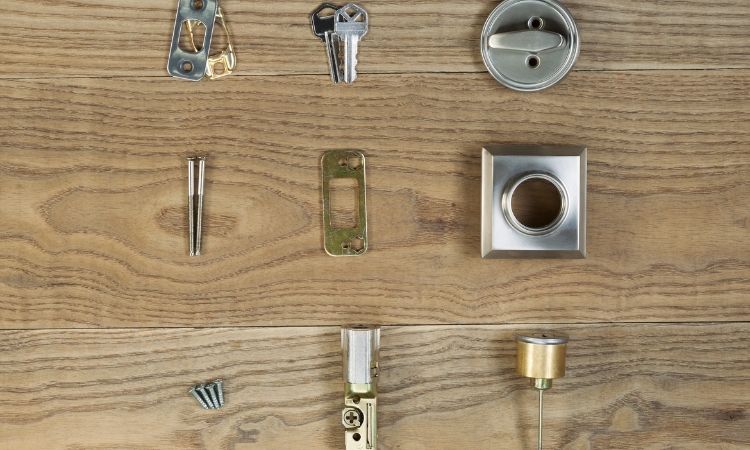
2. Lock Cylinder
Behind the keyhole is the cylinder. This is the essence of the locking mechanism. It contains the wafers or pins which sync with the proper key. Cylinders are available in different styles:
In case your key fits into the lock but fails to turn freely, you may want to check the cylinder.
3. Deadbolt or Latch
That is the heavy-duty portion that fits into the door frame and locks your door. There are two main types:
- Deadbolt: This needs manual or electronic movement to lock and unlock. Durable and suitable on front doors.
- Latch bolt: Has a spring that lets it automatically retract when you turn the knob. Used for interior doors.
In most Singaporean homes, the main wooden door typically has a deadbolt, while bedroom doors often have latch bolts. Digital locks also use electronic deadbolts controlled by touchpads or apps.
4. Strike Plate
This is a metal plate fixed on the door frame. When the bolt slides into place, it locks inside the hole in the strike plate.
When your door wiggles or fails to remain closed, the strike plate may be out of position. In a hot, humid climate, such as in Singapore, a wooden frame may expand, causing the strike plate to shift in location each season.
5. Faceplate
The faceplate is the visible metal plate on the side of the door. It covers the latch or bolt and assists in maintaining the lock body in place. Faceplates are often ignored, but they hold everything steady. The entire mechanism may shift due to a loose or rusty faceplate.
6. Thumbturn
This is a small knob or lever on the inside part of the door. It allows you to lock or unlock the door without a key.
For example, many Singapore flats have a thumbturn for locking the main door from inside at night. It comes in handy when you need to lock without a key in case of emergencies.
7. Spindle
A spindle is a slim rod that interlinks both the handles on each side of the door via the latch system. By turning the handle, the spindle turns and moves the latch out of the way, allowing the door to open.
A damaged or broken spindle may result in a loose turning or failure of your handle to open the door.
8. Door Handles or Knobs
To open the door, you grab the handles and knobs.
- In Singapore, more often lever handles are used, especially in new houses.
- Knobs are more common in older properties and room doors.
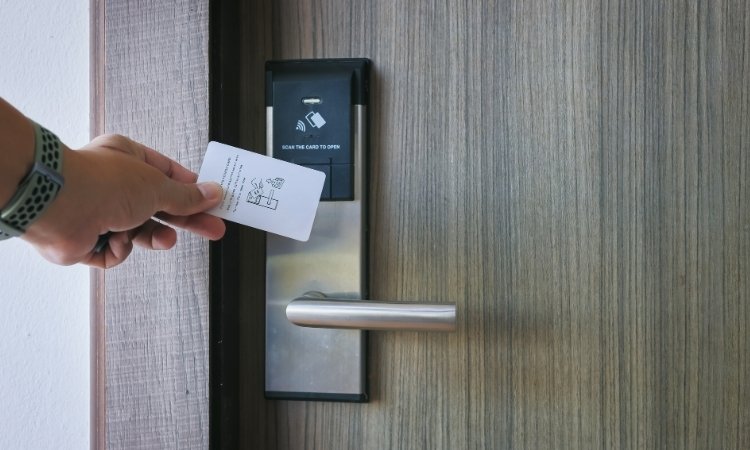
There are also digital locks that have handles integrated with a fingerprint sensor or keypad.
9. Escutcheon Plate
This is an ornamental plate that goes around the keyhole or thumb turn. It also secures the keyhole against tampering. In Singapore, some models come with anti-drill or anti-pick to provide extra protection.
Selecting an Appropriate Lock for Your House
Having learned what every Part Of A Door Lock does, how do you determine the proper lock to use on your door? Take the following into consideration:
- Place: The main door should have deadbolts, and the bedrooms should have latch bolts.
- Material: Wood, metal, or glass doors need to have locks and strike plates of a different construction.
- Usage: When you have elderly family members staying with you, then you should consider using locks that have big thumb turns or smart locks with fingerprint capability.
- Security level: The more the pins or anti-snap cylinders of the lock, the better the protection.
Conclusion
To be blunt, the majority of the population does not consider their locks until something stops working. However, you have done more than most. You gave yourself the necessary time to learn the mechanics of daily safety. That is a clever move.
Knowing the parts of a door lock, you will never be in the dark when selecting a lock or calling a locksmith. You are aware of the difference between a latch and a deadbolt, as well as why that strike plate is just as important as the key itself.
So whether you’re upgrading the main door of your Singapore flat or fixing a bedroom knob, you now hold the real key knowledge. And sometimes, that’s the best kind of lock protection there is.