
Maintaining your home’s plumbing system is one of the most important, yet often overlooked, aspects of homeownership. Whether you’re dealing with a leaking faucet or noticing a drop in water pressure, plumbing issues can cause significant damage and lead to costly repairs if left unchecked. This is where a professional plumbing inspection comes in. Regular plumbing checks help identify minor issues before they turn into major problems, saving you money in the long run and ensuring the safety and efficiency of your home’s water system.
Why Plumbing Inspections Matter
Your plumbing system is one of the most critical components of your home. It works tirelessly to supply fresh water and remove waste, but over time, wear and tear can cause issues that are not always visible to the untrained eye. Plumbing problems, if left unchecked, can lead to costly repairs, water damage, and even health risks.
Key Reasons to Schedule Annual Plumbing Inspections:
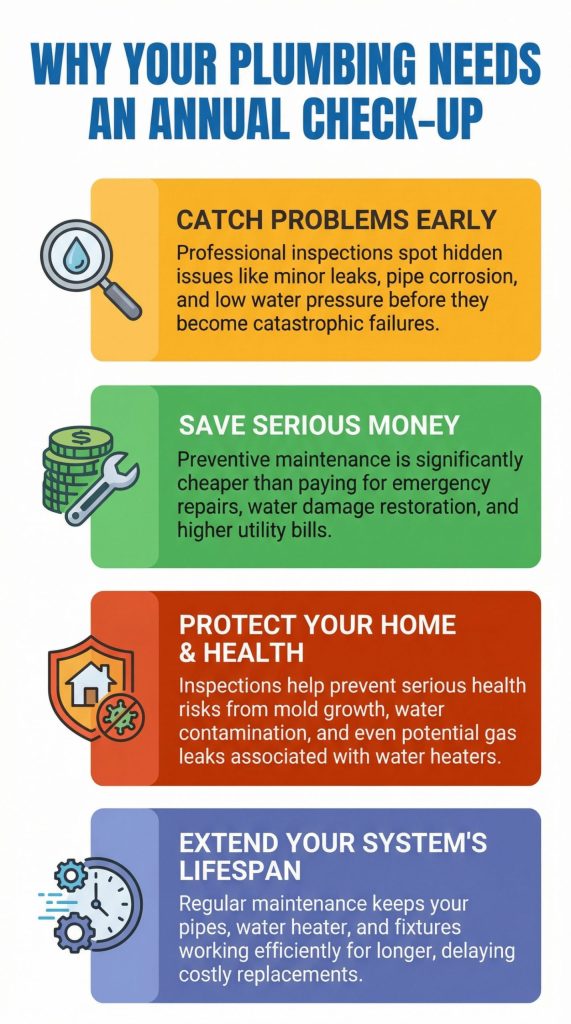
- Early Detection of Problems: Small issues such as leaks or low water pressure can be early indicators of larger problems. Annual inspections help catch these early, preventing costly repairs down the road.
- Cost Savings: Preventive maintenance is more cost-effective than emergency repairs. Catching a plumbing issue early can save you hundreds or even thousands in repair costs.
- Ensure Home Safety: Plumbing issues like gas leaks, water contamination, and mold growth can pose significant health risks. Regular inspections ensure that your plumbing system is safe and efficient.
- Prolong the Lifespan of Your Plumbing: Just like your car or your HVAC system, your plumbing system requires regular maintenance to keep it running smoothly. Inspections help you extend the lifespan of your pipes, water heater, and fixtures.
- Increase Property Value: For homeowners looking to sell, a well-maintained plumbing system is an attractive feature. A recent plumbing inspection can reassure potential buyers that the property is in good condition.
What Professionals Look For During a Plumbing Inspection
Plumbing inspections are comprehensive and cover several aspects of your home’s water system. Professional plumbers use specialized tools and techniques to detect issues that might not be visible to the naked eye. Here’s a breakdown of what professionals typically look for during a plumbing inspection:
1. Leak Detection
Leaks are one of the most common plumbing issues, and they can be hidden behind walls or under floors, making them difficult to spot. During an inspection, professionals will look for signs of leaks in several key areas, including:
- Under sinks: Inspecting the pipes for signs of moisture or water stains.
- Behind toilets: Checking for leaks around the base or hidden water damage.
- Appliances: Ensuring dishwashers, washing machines, and refrigerators are not leaking.
- Outdoor spigots: Checking hose bibs and outdoor plumbing for leaks or corrosion.
2. Water Pressure Test
Water pressure plays a vital role in the functioning of your plumbing system. Water pressure that is too low or too high can signal underlying problems, such as pipe blockages, leaks, or faulty pressure regulators.
- Ideal water pressure: 40-60 psi is considered optimal for most homes.
- Pressure gauge: Plumbers will use a pressure gauge to measure water pressure at various points in your home to ensure everything is functioning correctly.
- Pressure regulator: Inspecting and adjusting the regulator can help maintain consistent water pressure, preventing damage to pipes and fixtures.
3. Water Heater Inspection
Your water heater is essential for providing hot water throughout your home. Regular inspections ensure that it’s functioning efficiently and safely.
- Check for leaks: Leaks around the water heater can indicate a problem with the tank or connections.
- Sediment flushing: Over time, sediment can build up in the tank, reducing efficiency. Professionals will flush the tank to remove sediment and extend its lifespan.
- Temperature setting: Set the water heater to 120°F to prevent scalding and improve energy efficiency.
- Anode rod: Inspecting the anode rod, which prevents rust and corrosion in the tank.
4. Drainage Inspection
Clogged drains are a common household issue. However, frequent clogs may indicate a larger problem in the plumbing system. Professionals will check for any blockages or signs of slow drainage in:
- Kitchen sinks
- Bathroom drains
- Toilets
They’ll also use professional tools, such as drain snakes, to clearminor blockages and assess the overall condition of your drain pipes.
5. Pipe Corrosion Check
Over time, pipes can corrode, leading to leaks, water contamination, and reduced water pressure. Common signs of corrosion include:
- Rust or discoloration around pipes.
- Bubbling paint on walls or ceilings, indicating water leaks.
- Odors or a metallic taste in the water.
Regularly inspecting pipes helps catch signs of corrosion early, preventing costly repairs or replacements.
Why Every Homeowner Needs Annual Plumbing Inspections
While some plumbing issues can be fixed with a simple DIY approach, many require the expertise of a professional plumber. Regular plumbing inspections are crucial for maintaining a healthy plumbing system, reducing the risk of emergencies, and saving on costly repairs.
Key Benefits of Annual Plumbing Inspections
- Early Problem Identification: An annual inspection helps identify problems such as pipe corrosion, leaks, and drainage issues before they escalate into major problems. Early identification allows for prompt fixes, preventing further damage.
- Health and Safety: Plumbing issues like leaking gas pipes, mold from water damage, or contaminated water can pose serious health risks. Annual inspections ensure that your home’s plumbing system is safe.
- Cost Savings: Preventive maintenance is far more cost-effective than dealing with plumbing emergencies. Regular inspections help avoid the need for expensive repairs, such as replacing burst pipes or repairing water-damaged walls and floors.
- Efficient Water Usage: An inspection can help you identify inefficiencies in your plumbing system, such as low water pressure, leaks, or inefficient water heaters. Fixing these issues can lead to lower water bills and improved energy efficiency.
Key Areas of Focus During a Plumbing Inspection
A professional plumbing inspection is a thorough process that checks various critical components of your home’s plumbing system. Each part of the plumbing system serves a vital function, and ensuring it operates properly is key to avoiding unexpected issues. In this section, we’ll dive deeper into the specific areas that professional plumbers focus on during an inspection.
1. Faucet and Fixture Inspection
Faucets and fixtures, though simple in design, play an essential role in your daily water usage. Over time, they can develop issues such as leaks, mineral build-up, or corrosion. Professional plumbers will check all faucets and fixtures in your home, including:
- Kitchen faucets: Inspecting for any leaks or rust around the faucet or handles.
- Bathroom faucets: Ensuring proper water flow and checking for corrosion around the faucet’s base.
- Showerheads: Ensuring there are no clogs, rust, or leaks that could affect water pressure.
These checks are crucial for preventing water wastage and ensuring that your faucets and fixtures continue to function correctly without contributing to higher utility bills.
2. Toilet Leak Test
Toilets are one of the most used fixtures in any household. A running or leaking toilet can waste hundreds of gallons of water per day, leading to significantly higher water bills. A professional plumber will:
- Test for leaks: Use food coloring in the toilet tank to check for leaks at the flush valve or flapper.
- Inspect for water efficiency: Ensure the toilet flushes correctly and efficiently, without issues that could lead to frequent clogging or wasted water.
Addressing toilet issues early can save you both money and the headache of plumbing emergencies.
3. Sewer Line Inspection
The sewer line is an essential part of your plumbing system, as it carries waste away from your home. Over time, sewer lines can become clogged or damaged due to tree root infiltration, corrosion, or debris buildup. A plumber will use a camera inspection to:
- Inspect the sewer line for cracks, blockages, or tree root intrusion.
- Inspect the pipe for overall condition to determine whether it needs repair or replacement.
- Prevent any potential backups or overflow that could cause significant damage to your property.
Sewer line inspections are vital for older homes where pipes may be more prone to issues. Timely inspections can save you from costly repairs and unpleasant messes.
4. Pipe Corrosion and Rust Check
Pipe corrosion is one of the most damaging issues that can affect the longevity of your plumbing system. Pipes that are made of older materials, such as galvanized steel or iron, are particularly susceptible to rust and corrosion. During the inspection, plumbers will:
- Examine exposed pipes for signs of rust, corrosion, or degradation.
- Look for leaks or discoloration in walls or ceilings, which may indicate corroded pipes behind the surface.
- Check for bubbling paint around exposed pipes, which often signals water leakage.
Corroded pipes can lead to water damage, leaks, and even burst pipes if left unaddressed. Regular inspections ensure that your plumbing is safe and functioning correctly.
5. Drainage and Vent System Inspection
Your home’s drainage and vent systems are essential for proper waste disposal and maintaining healthy air circulation in your plumbing system. Plumbers will inspect the drainage system for:
- Blockages or slow drains: In the kitchen, bathroom, and toilets to ensure there are no obstructions that could lead to clogs or backups.
- Ventilation system: Ensuring that the system is not clogged or obstructed, which could lead to poor drainage and drainage odors.
Drains and vents that are not functioning properly can cause water damage, mold, or unpleasant odors in your home. Ensuring that your drainage and vent systems are clear is crucial to maintaining a healthy, efficient plumbing system.
Professional Tools and Techniques for Plumbing Inspections
Modern plumbing inspections often involve advanced technology and specialized tools that allow plumbers to detect issues that would otherwise go unnoticed. Here’s a look at some of the professional tools used during plumbing inspections:
1. Infrared Leak Detection
Infrared cameras can detect temperature variations in pipes and walls, allowing plumbers to spot hidden leaks without tearing up walls or floors. This tool is handy for detecting leaks in hard-to-reach areas or in concealed systems behind surfaces.
2. Camera Inspections
A drain camera is used to inspect pipes for cracks, blockages, and other issues that are difficult to see with the naked eye. The camera is inserted into the pipes, and the plumber can view live footage of the pipe interior on a screen. This tool is invaluable for sewer line inspections and for identifying root infiltration or severe clogs.
3. Pressure Testing
Using a pressure gauge, plumbers can check the water pressure throughout your plumbing system. If the pressure is too low, it may indicate a pipe blockage or leak. Too high of water pressure can strain your pipes, causing them to burst or wear out prematurely.
4. Water Meter Leak Test
A water meter leak test is used to detect hidden leaks that may not be visible in the system. By monitoring the water meter before and after turning off all water in the home, the plumber can determine if there is any water loss that indicates a leak.
How Regular Plumbing Inspections Save Money and Prevent Damage
Regular plumbing inspections not only keep your home’s plumbing system in optimal condition but also serve as an essential preventive measure to avoid costly repairs, water damage, and potential health hazards. In this section, we will explore the cost-saving benefits of plumbing inspections, the importance of addressing problems early, and how proper maintenance helps homeowners save money in the long run.
1. Early Problem Identification and Prevention
Many plumbing issues begin as minor, undetectable problems that can escalate quickly if left untreated. A leak under a sink, a small crack in a pipe, or a malfunctioning water heater may seem insignificant at first, but over time, they can cause significant damage to your property.
A routine plumbing inspection helps to identify these problems before they become urgent. For example:
- Slow leaks: Often, leaks under sinks or behind walls are not visible to the naked eye. Over time, these can damage floors, ceilings, and walls. A professional plumber can detect these issues using infrared cameras or moisture sensors.
- Corrosion: Early detection of pipe corrosion prevents bursts and floods. Replacing small sections of corroded pipes before they rupture can save you thousands in emergency repairs.
- Water heater issues: Without regular inspections, water heaters can accumulate sediment, leading to inefficient operation and higher energy bills. Flushing the system regularly helps avoid costly replacements.
By addressing minor issues early, homeowners can avoid large-scale repairs and potential water damage, saving both time and money.
2. Cost Savings Through Routine Maintenance
Routine plumbing maintenance is far more cost-effective than waiting for an emergency repair. When homeowners neglect routine inspections, they often face:
- Emergency plumbing repairs: These are usually more expensive than scheduled maintenance due to the urgency and the potential damage that has already occurred.
- Water wastage: Small leaks or inefficiencies in faucets, toilets, or water heaters can lead to higher water bills. Regular inspections help prevent unnecessary water wastage.
- Emergency service fees: Calling a plumber after hours or on a holiday can lead to inflated prices. Routine checks allow plumbers to detect and fix problems during regular business hours, saving on emergency fees.
3. Minimizing Water Damage and Mold Growth
Water damage is one of the most expensive issues that homeowners face, often requiring costly repairs to fix the structural damage and replace waterlogged furniture or appliances. Leaks, burst pipes, and clogged drains all pose significant risks.
A plumbing inspection helps minimize these risks by:
- Checking for hidden leaks around pipes and appliances, especially in hard-to-reach areas.
- Identifying potential water damage before it spreads to walls, floors, and ceilings.
- Preventing mold and mildew growth by ensuring that water doesn’t linger in damp areas, which could lead to health hazards and the need for expensive mold remediation.
Water damage can cause significant financial strain and emotional stress. Regular inspections help to prevent these situations from escalating.
4. Maintaining the Lifespan of Your Plumbing System
Regular inspections and maintenance can significantly extend the life of your plumbing system. Neglected plumbing systems deteriorate faster, leading to more frequent repairs and replacements.
Key factors that impact the lifespan of your plumbing system include:
- Pipe material: Older pipes, such as galvanized steel or cast iron, are more prone to corrosion and rust. Routine inspections can detect early signs of wear and help plan timely replacements.
- Water heater maintenance: Water heaters can last 10-15 years, but neglecting them can cause them to fail much earlier. Sediment buildup, incorrect temperature settings, and faulty valves can shorten your water heater’s lifespan.
- Drainage system health: Regular inspections can ensure that drains and sewer lines are free from blockages or tree root invasions, which could otherwise lead to major backups or burst pipes.
By investing in regular inspections, you ensure that your plumbing system continues to perform well for years, avoiding early replacements and costly repairs.
Conclusion: The Importance of Regular Plumbing Inspections
Having a professional plumber inspect your home’s plumbing system annually is essential for maintaining a safe, efficient, and functional water system. Regular inspections catch issues early, preventing costly repairs and ensuring the longevity of your pipes, water heaters, drains, and fixtures.
At Ps home maintenance, our team of expert plumbers is equipped with the latest tools and techniques to provide comprehensive plumbing inspections, including water heater checks, leak detection, and pipe corrosion analysis. Ensure the health of your plumbing system by scheduling an annual inspection with us today!