

A broken or damaged wobbly chair doesn’t only causes discomfort but can also be extremely dangerous. Plus, if you keep using it despite being damaged, it can worsen the damage and cost you a lot. To help you affordably repair a wobbly chair in Singapore, we’ll teach you step by step how you can do it.
It’s okay if you don’t want to pay the hefty prices of the professionals. You’ll learn everything in this quick guide about repairing a wobbly chair right at your home. Also, PS Home Maintenance Singapore expert in demolition services, vinyl flooring, and exhaust fan installation services in Singapore.
How to Repair a Wobbly Chair in Singapore? Detailed Guide
Repairing a wobbly chair at home is indeed possible. You can do it all by yourself. All you have to do is follow every single step mentioned below carefully. Don’t miss any to avoid mistakes..
1. Find Where It’s Loose
Flip the chair over and check every leg and joint with your hands. Wiggle things around. If something moves that shouldn’t, that’s your problem spot. Don’t guess or rush through it. Look at the screws, joints, and glue lines.
Sometimes it’s one corner, other times it’s the whole thing. Mark anything that moves or creaks. Once you’ve found all the loose parts, then you’re ready to fix them.
2. Tighten Every Screw
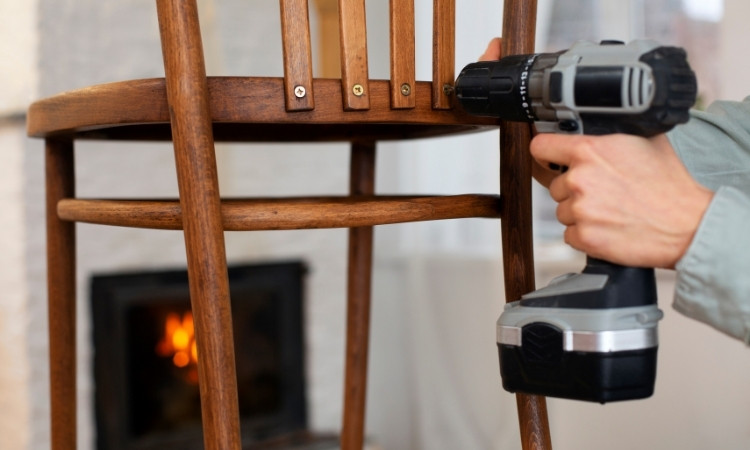
Grab a screwdriver or Allen key, depending on the chair. Go through every screw and twist it tight. Don’t go overboard or you might crack the wood. If a screw just spins around and doesn’t grab, leave it for now, that means the hole’s worn out and needs fixing.
Tightening alone sometimes solves the wobble, especially if things have just loosened over time. Always check every screw, not just the wobbly spot.
3. Use Glue Where It’s Wobbly
If the joint is wiggling but not broken, glue it. Pull the loose part apart just enough to squeeze glue into the gap. Push it back together, wipe away extra glue, and hold it still. You’ll need clamps or something heavy to keep it tight until it dries.
Don’t ruin the grip of the glue by messing it up before it dries. Let it sit overnight so it can completely dry and get a good grip. Rushing this part just ruins everything and wastes your effort.
4. Fix Stripped Screw Holes
If a screw won’t tighten, the hole’s probably worn out. Pull the screw out, shove a couple of wood toothpicks in the hole with some glue, and snap off the extra. Once it’s dry, screw it back in like normal.
The toothpicks give the screw something to grab again. It’s a cheap, fast fix that works better than replacing the whole part. Don’t ignore stripped holes, they’re a common cause of wobbles.
5. Clamp It and Leave It
Once you glue something, it needs to stay put. Use clamps, belts, or whatever you have that can hold pressure. Make sure everything lines up straight before tightening.
Leave it for at least eight hours. Overnight is better. No shortcuts here. if the glue shifts while drying, the wobble will come back and you’ll be right back at step one.
6. Sand Off the Rough Bits
After the glue’s fully dry, feel around the joints. If there’s hardened glue sticking out or sharp spots, grab some sandpaper and smooth it out. Use medium grit, nothing too harsh.
You’re not sanding furniture for a museum, just cleaning it up so no one gets a splinter. Go easy, just enough to make it feel nice again. Especially if you’re planning to paint or stain it afterward.
7. Test It Before You Use It
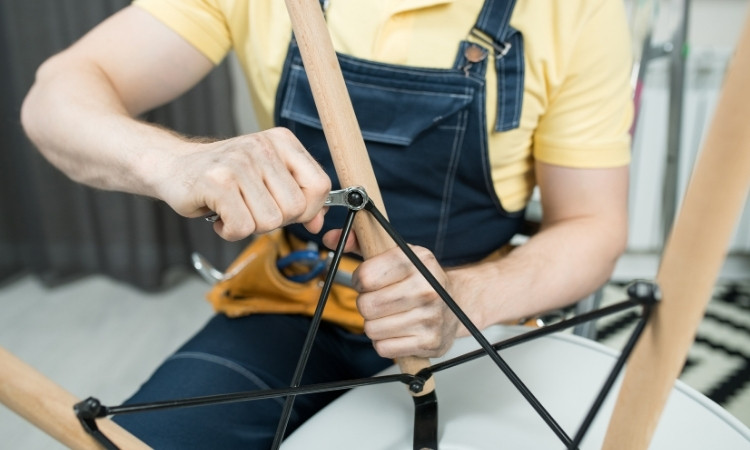
Set the chair on a flat floor. Push on it from all sides. Sit down and move around a little. If it stays solid, you’re good. If something still moves, go back and check your work. Sometimes one spot slips or doesn’t dry right.
Don’t skip this part. Better to find out now than have it fall apart when someone sits down holding a cup of hot coffee.
Final Words
Don’t you want to get your wobbly chair fixed? We totally get it, professionals may charge you quite a lot for this service. But don’t worry, let us teach you how to repair a wobbly chair in Singapore.
Follow these steps: First, flip the chair and check every joint or leg for movement, then tighten all the screws using the right tool.
If anything still feels loose, pull it apart and add wood glue inside, then clamp the joint tightly until it dries.
For screws that won’t grip, fill the hole with glue and toothpicks, then screw it back in. Once dry, sand any rough glue or edges, then test the chair on a flat surface to make sure it’s stable.