

When someone says, Install a new electric oven, it sounds easy until you go to your kitchen, stand there, and look at a cardboard box full of wires and warnings. It is then that you feel it is a much bigger project than you think.
In Singapore, where kitchen areas are limited, and all electrical sites are highly regulated, the proper installation of this is not simply a matter of convenience. It is all about safety, functionality, and long-term peace of mind.
Maybe your old oven gave up. Perhaps you have finally decided to upgrade to the built-in model you’ve been admiring for the past several months. Either way, you’re not just plugging in an appliance. You’re creating a better cooking experience.
This guide walks you through how to install a new electric oven in a kitchen setting in Singapore. Just plain simple instruction, designed to help in real homes, with real cooks, and real results. PS Home Maintenance Singapore expert in carpentry services, kitchen sink replacement, and flooring installation services in Singapore.
Why Your Oven Setup Matters in Singapore Homes
Ovens do not come in plug-and-play like a toaster. They consume large currents, produce heat, and require proper ventilation. Most of the houses in Singapore, particularly HDB flats, were not originally constructed with an oven in mind. This implies that special attention should be paid when installing a new electric oven so that it can safely operate and not overload your electrical system.
Installing an oven wrongly can lead to tripped breakers, melted sockets, or worse, fire. That’s why you need to get this right the first time.
First Things First: Do You Have the Right Power Setup?
Before unboxing your oven, check your kitchen’s power source:
- Most electric ovens in Singapore need a 230V power supply.
- Check your oven’s amp requirement. Some models need a dedicated 13A or 15A power outlet.
- Don’t use extension cords or multi-way adapters.
- Ensure no other heavy appliance (like a washing machine or dryer) shares the same circuit.
If your kitchen doesn’t have the proper power outlet, you’ll need to contact a licensed EMA electrician to install one. This isn’t optional. Rather, it’s required by law.
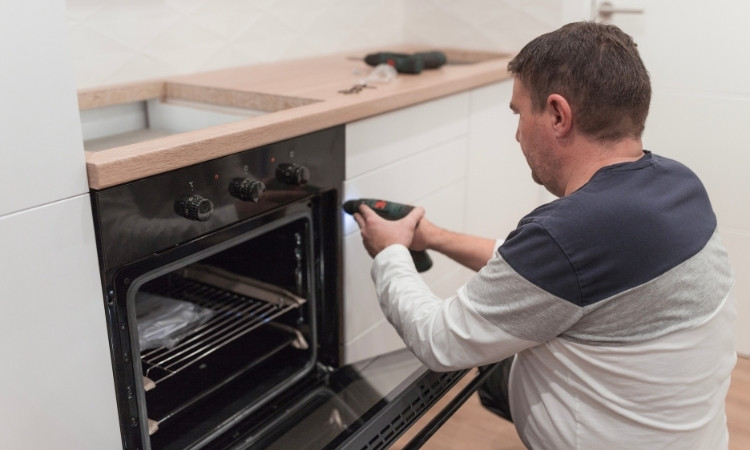
Step-by-Step New Electric Oven Installation Singapore
Step 1: Measure Your Cabinet Space
Start with measuring the space where your new oven will go. This step is crucial, especially in Singapore kitchens, where space is often limited.
- Standard built-in ovens are 60cm wide.
- Leave 2-5cm clearance on the sides and back for airflow.
- Make sure the depth is enough, especially if there are pipes or obstructions behind the unit.
- If you’re replacing an old oven, check if the new one is taller or deeper than the old one.
For BTO flats, most kitchen layouts are designed to accommodate built-in ovens, but older resale flats may require some carpentry work.
Step 2: Prepare the Power Connection
Next, ensure the power outlet is nearby and accessible:
- If it’s a plug-in model, make sure the 13A outlet is close enough and not behind the oven (this is a fire risk).
- In the event of a hardwired model, stop at this stage. An electrician will be required to do the wiring.
- The main power must always be turned off prior to connecting anything.
To stay safe, never install a new electric oven with temporary connections or with DIY cables. You’re dealing with high voltage.
Step 3: Slide the Oven into Place
Place the oven near the cabinet opening and fit it closely.
- Clear any packaging, fixing brackets, or internal securing bolts.
- Have a spirit level to ensure that your oven is level. This influences the even cooking of your food.
- Make sure there are fixing screws on the cabinet side of the oven; align and screw them in properly.
Be gentle during this step. Ovens are heavy and awkward to handle alone. Get help if needed.
Step 4: Plug It In (or Hardwire It)
It is now time to install a new electric oven:
- For plug-in ovens: connect the plug to the 13A or 15A outlet.
- For hardwired ovens: have your licensed electrician connect the wiring to your dedicated circuit.
After plugging it in, reconnect power at the mains. You will hear a gentle click or see an indicator light.
Step 5: Initial Testing
Your oven is in place and powered. Now, let’s test it.
- Put it on low and run it for approximately 15 minutes.
- There will be some burning of the protective coatings, and you should expect a little smell. This is normal.
- Check that the fan, internal light, and heating elements are working fine.
When all is in order, you are set to cook!
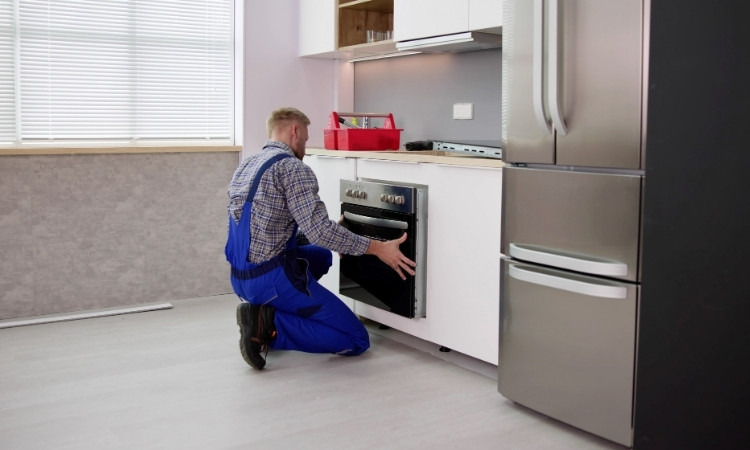
Do You Need a Professional to Install a New Electric Oven?
Yes, if:
- You have a hardwired model.
- Your home doesn’t already have a dedicated oven socket.
- You don’t know your home’s electrical load capacity.
The safest way to install a new electric oven is to get an EMA-licensed electrician to come and inspect or install your wiring.
Conclusion
If you’ve made it this far, you’re already ahead of most first-time oven owners. You’ve got a real picture of what it takes to install a new electric oven in a Singapore kitchen. The fact is, a new electric oven installation has nothing to do with being a competent handyman. It is all about being familiar with where you live, your power arrangement, and your boundaries. In a place like Singapore, electrical standards are non-negotiable, so doing it right means doing it safely.
Either learn to do it yourself or contract it to a licensed electrician; either way, the objective is the same: a dependable oven that cooks evenly, fits snugly, and does not trip off your power every time you roast a Sunday dinner! Measure twice, test your amps, and have fun with the upgrade since a well-installed oven is the heart of your kitchen.