
Water leaks are among the most common yet overlooked issues homeowners face. Left undetected, even a small leak can lead to costly water damage, mold growth, and higher water bills. In Singapore, where humidity levels are high and plumbing systems are often exposed to wear and tear, water leak detection is a critical part of maintaining your home. This comprehensive guide will walk you through everything you need to know about water leak detection, repair, and prevention. We’ll explore the causes of water leaks, the best ways to detect them, and expert tips for repairing and preventing leaks in your home.
What Causes Water Leaks in Homes?
Water leaks can occur for several reasons, including aging infrastructure and faulty fixtures. The causes are typically linked to the condition of your plumbing system, environmental factors, and homeowners’ maintenance habits. Here are some of the most common causes of water leaks in homes:
- Aging or Corroded Pipes: Over time, pipes can corrode or degrade, especially in older homes with older plumbing systems. This can lead to slow leaks that often go unnoticed until significant damage occurs.
- Faulty Appliances: Dishwashers, refrigerators, washing machines, and water heaters are prone to leaks, especially when parts like hoses or seals wear out. Regular maintenance of these appliances is essential to prevent leaks.
- Loose or Damaged Fixtures: Faucets, showerheads, and toilets can develop leaks when seals break, washers degrade, or the fixtures become loose. Even minor leaks from these fixtures can result in significant water wastage over time.
- Roof Leaks: Damage from storms, wear, or age can cause water seepage that affects the plumbing system. These leaks may not always be visible in your living areas but can cause damage over time.
- Clogged or Broken Drainage Systems: Blocked pipes or broken drainage systems can cause water to back up and leak into your home, resulting in structural and water damage.
Common Types of Water Leaks in Homes
Several types of water leaks can affect different parts of your home. Identifying the type of leak is crucial for effective repair and prevention:
- Pipe Leaks: These leaks are often caused by aging infrastructure, corrosion, or high water pressure. They can occur within walls, ceilings, or underground.
- Appliance Leaks: Leaks from appliances like dishwashers, washing machines, and refrigerators are common. These leaks often occur at connection points where hoses meet the appliance or faucet.
- Roof Leaks: If your roof is damaged, water can seep into your home, affecting the attic and ceiling. Roof leaks may lead to mold growth and water stains on walls and ceilings.
- Slab Leaks: These are leaks under the foundation of your home, often caused by shifting soil or corroded pipes. Slab leaks are harder to detect but can cause significant damage to your foundation.
How to Identify Water Leaks in Your Home
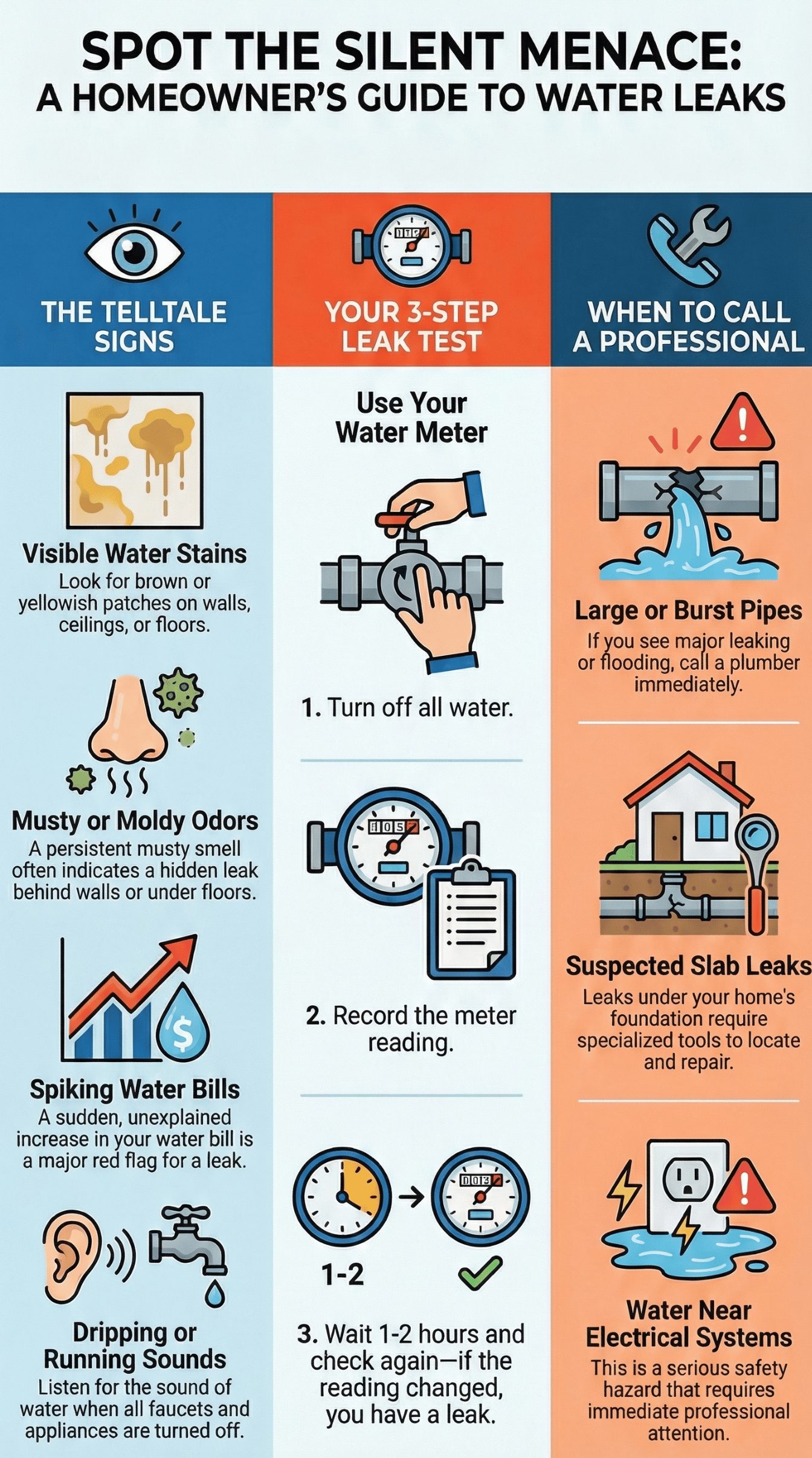
Water leaks are not always easy to spot, especially when they occur in hidden areas, such as behind walls or under floors. However, there are several signs you can look for to identify potential leaks early:
- Water Stains and Discoloration: One of the most apparent signs of a water leak is water stains or discoloration on walls, ceilings, or floors. These stains often appear as brown or yellowish patches, indicating that water has seeped through the surface.
- Mold and Mildew Odors: If you notice a musty or moldy smell, this could be a sign of hidden leaks. Mold thrives in damp environments, and persistent odors may indicate water accumulation in walls, ceilings, or floors.
- Damp Spots: Wet patches on your floor or walls can indicate a plumbing issue. These spots are often most noticeable near sinks, bathtubs, or toilets, where leaks are most common.
- Unexplained Spikes in Water Bills: If your water usage has increased without any change in your habits, you might have an undetected leak. Water meter monitoring can help you identify unusual consumption spikes.
- Dripping or Running Sounds: A constant dripping or running water sound, even when faucets are off, can point to a hidden leak. Pay attention to the sounds, especially at night when the house is quiet.
How to Check for Water Leaks Using Your Water Meter
One of the simplest ways to detect a water leak is to check your water meter. This method helps to determine if there is an issue with your plumbing system.
- Turn off all faucets and water-using appliances in your home.
- Check the water meter and take note of the current reading.
- Wait an hour or two, then recheck the meter.
- Compare the readings. If the reading has changed while no water has been used, it’s likely that you leak somewhere in the system.
Early Signs of Water Leaks
Detecting water leaks early is crucial for minimizing damage and reducing repair costs. The earlier you identify the problem, the easier and more affordable it will be to fix. Some early signs to look out for include:
- Low Water Pressure: If you notice a sudden drop in water pressure, it could indicate a leak in your plumbing system.
- Dripping or Running Sounds: Even when your faucets and appliances are off, you may still hear water running or dripping, which could indicate a leak in hidden pipes.
- Damp or Wet Areas: Any persistent damp spots on your floors, walls, or ceilings may indicate a water leak that needs immediate attention.
Advanced Water Leak Detection Methods
For more serious cases, homeowners may need to use advanced detection methods or call in a professional. These methods include:
- Thermal Imaging Cameras (Thermal LeakDetect™): Thermal cameras can detect temperature differences in your walls, floors, and ceilings, helping you pinpoint hidden leaks.
- Acoustic Sensors / Acoustic Listening Devices (Ultrasonic LeakDetect™): These devices can detect sounds emitted by water flowing through pipes, helping identify leaks that are otherwise difficult to detect.
- Moisture Meters: These devices detect excess moisture in walls, floors, and ceilings. These devices can help identify hidden leaks in areas that aren’t immediately visible.
Professional Leak Detection Services
While DIY methods are helpful, there are situations where you’ll need to hire a professional plumbing service to detect and repair the leak. Experienced plumbers use state-of-the-art tools such as thermal imaging, ultrasonic sensors, and moisture meters to locate leaks with precision and accuracy. If you suspect a serious leak or have trouble identifying one, it’s best to contact a licensed plumber for toilet plumbing and repair services.
Repairing Water Leaks: Expert Tips for Homeowners
Once a water leak is detected, the next crucial step is repairing it before further damage occurs. The approach to fixing a leak depends on its location and severity. Here are some expert tips for repairing common types of leaks:
Pipe Leaks: If you spot a small pipe leak, you can use pipe repair clamps or sealant tape as a temporary solution until you can get professional help. For more persistent issues, you may need to replace the entire affected pipe section.
Faucet Leaks: Leaky faucets are a common issue. Replacing worn-out washers or O-rings usually resolves the problem. This is a simple DIY task that can be done with basic tools.
Appliance Leaks: For leaking dishwashers, washing machines, or refrigerators, check for loose connections, faulty hoses, or broken seals. Replacing these parts can prevent further water leakage and damage.
When to Call a Professional Plumber
A professional plumber should be called immediately in the following situations: burst or continuously leaking pipes after shutting off water, major blockages that cannot be cleared, broken boiler or heating systems, suspected gas leaks or carbon monoxide alarms, water near electrical systems, overflowing toilets or sanitation problems, sudden loss of water supply, and flooding or standing water inside the home.
Large Leaks: If you have a significant water leak that is causing damage to your home, it’s best to call a professional plumber. They have the expertise and equipment to locate and repair the leak quickly, minimizing water damage.
Slab Leaks: If you suspect a leak under your home’s foundation (a slab leak), it’s essential to contact a plumber who can use advanced leak-detection methods such as thermal imaging or ultrasonic leak detection to pinpoint the issue and avoid costly damage to your foundation.
Corroded or Burst Pipes: If the pipes in your home are old and corroded, it’s often more cost-effective in the long run to replace them rather than constantly repairing leaks. A licensed plumber can assess your plumbing system and recommend necessary upgrades to prevent future leaks.
How to Prevent Water Leaks in Your Home
Preventing water leaks before they occur is the most effective way to protect your home from water damage. Here are some preventive measures homeowners can take:
Regular Plumbing Inspections
Have your plumbing system inspected by a professional at least once a year. During these inspections, the plumber can check for signs of wear or potential issues, such as corroded pipes or weak seals, and address them before they become major leaks.
Proper Pipe Insulation
In areas of your home where pipes are exposed to extreme temperatures, such as attics or crawlspaces, it’s crucial to insulate the pipes. Insulated pipes are less likely to freeze in winter, which can prevent them from bursting and causing severe water leaks.
Control Water Pressure
High water pressure can put stress on pipes, leading to leaks or bursts over time. Installing a water pressure regulator can help ensure that the pressure in your plumbing system remains within safe levels, preventing unnecessary damage.
Replace Worn Fixtures
Faucets, showerheads, and other plumbing fixtures wear out over time, leading to leaks. Regularly replacing worn or damaged fixtures can help prevent leaks. Be sure to inspect the washers, O-rings, and seals in fixtures to ensure they remain intact and functional.
Maintain Appliances
Regular maintenance of household appliances that use water, such as dishwashers, washing machines, and water heaters, can help prevent leaks. Check hoses for cracks, clean filters, and ensure connections are tight. Scheduling annual appliance maintenance can extend their lifespan and prevent costly repairs.
Choosing the Right Leak Detection Services
While homeowners can do some water leak detection, there are times when professional help is required. Here’s how to find a reliable plumbing service for water leak detection and repair:
- Look for Licensed Plumbers: Always choose licensed plumbers who have the training and experience to detect and repair leaks effectively. A licensed plumber will also ensure that repairs meet local regulations, protecting your home from potential future issues.
- Read Reviews and Ask for References: Before hiring a plumber, check online reviews or ask friends, family, or neighbors for recommendations. A trusted plumber should have a reputation for quality work and timely service.
- Check for Advanced Tools and Techniques: Choose a plumbing service that uses modern detection technologies like thermal imaging cameras, acoustic sensors, and moisture meters. These advanced tools ensure precise and non-invasive leak detection, saving you time and money in the long run.
- Emergency Services: Water leaks don’t always happen during business hours. Opt for a plumbing service that offers emergency plumbing to ensure you can get help when you need it most, especially for significant leaks or water damage.
Emergency Water Leak Detection Services
In some cases, water leaks can occur unexpectedly, causing significant damage to your property in a short amount of time. Emergency water leak detection services are designed to address these urgent situations, providing immediate response and professional assistance. If you encounter a burst pipe, significant roof leak, or unexpected plumbing failure, it’s essential to have a plumber who can quickly locate and fix the issue before it worsens.
Water Line Maintenance and Upgrading
One way to prevent future leaks and improve the efficiency of your plumbing system is by upgrading your water lines. Older homes often have outdated piping materials like galvanized steel, which are prone to corrosion and leaks. Replacing these pipes with more durable materials such as copper or PEX can significantly reduce the likelihood of leaks.
Regular water line maintenance ensures that your plumbing system remains in top condition. This includes checking for signs of wear, replacing worn parts, and ensuring that your pipes are appropriately insulated to prevent freezing in colder months.
How Regular Plumbing Inspections Can Save You Money
One of the most effective ways to prevent water leaks from causing significant damage is through regular plumbing inspections. A professional plumber can assess the condition of your plumbing system, identify potential weak spots, and perform routine maintenance to prevent leaks before they occur.
Preventive Inspections: What to Expect
A comprehensive plumbing inspection typically includes the following:
- Inspection of Pipes: A plumber will check for signs of corrosion, cracking, or leaks in your plumbing system.
- Checking Fixtures: Faucets, toilets, and showerheads will be examined for wear and tear that could lead to leaks.
- Water Pressure Test: The plumber will measure your home’s water pressure to ensure it is within safe limits. High water pressure can stress your pipes, leading to leaks and bursts.
- Appliance Check: Appliances like dishwashers, washing machines, and water heaters will be inspected for potential leaks or faults.
Regular plumbing inspections help detect issues early, allowing for minor repairs before they turn into costly problems. Preventive care ensures that your plumbing system functions efficiently and reduces the risk of significant water damage.
Water Conservation and Cost Savings from Early Leak Detection
Detecting and repairing water leaks early not only saves your home from potential damage but also helps conserve water and reduce utility bills. Even small leaks can waste a significant amount of water over time, leading to higher water costs. In Singapore, where water conservation is a priority, early leak detection and repair help homeowners reduce their environmental footprint.
- Conserving Water: Leaks that go unnoticed can waste thousands of gallons of water. By detecting leaks early, you can reduce water wastage and contribute to more sustainable living.
- Reducing Water Bills: Leaks often increase water consumption, leading to higher bills. Early detection helps you avoid this financial burden by ensuring your plumbing system is working efficiently.
- Preventing Mold and Mildew: Leaks that go unnoticed can lead to mold and mildew growth, which not only damages your home but also requires costly remediation. By addressing leaks early, you can prevent these issues from arising.
Emergency Plumbing Services: Always Ready When You Need Help
Water leaks can happen at any time, often when you least expect it. That’s why it’s essential to have access to emergency plumbing services. Professional plumbers are available to handle urgent situations, such as burst pipes, roof leaks, and appliance failures. They have the expertise and equipment to quickly assess the situation and implement a solution to prevent further damage.
- 24/7 Availability: Emergency plumbers are available around the clock to respond to urgent situations.
- Quick Response: Plumbers can quickly arrive at your home to assess the situation and begin repairs immediately.
- Minimizing Damage: The faster you can address a leak, the less damage it will cause. Emergency plumbing services help mitigate property damage, water wastage, and costly repairs.
Prevent Water Leaks and Protect Your Home
Water leak detection is a critical part of home maintenance. By understanding the causes and signs of water leaks, using advanced leak detection tools, and scheduling regular plumbing inspections, you can protect your home from water damage, conserve water, and save on utility costs. Whether you’re dealing with a small faucet leak or a major slab leak, taking action early can prevent bigger issues down the road.
Don’t wait for leaks to become serious problems; contact a licensed plumber today for expert water leak detection and repair services. With the right tools and professional care, you can ensure your plumbing system operates efficiently, saving you money and providing peace of mind in the long run.
Emergency Plumbing Services: Always Ready When You Need Help
Water leaks can happen at any time, often when you least expect it. That’s why it’s essential to have access to emergency plumbing services. Professional plumbers are available to handle urgent situations, such as burst pipes, roof leaks, and appliance failures. They have the expertise and equipment to quickly assess the situation and implement a solution to prevent further damage.
- 24/7 Availability: Emergency plumbers are available around the clock to respond to urgent situations.
- Quick Response: Plumbers can quickly arrive at your home to assess the situation and begin repairs immediately.
- Minimizing Damage: The faster you can address a leak, the less damage it will cause. Emergency plumbing services help mitigate property damage, water wastage, and costly repairs.
Conclusion
Water leak detection is a critical part of home maintenance. By understanding the causes and signs of water leaks, using advanced leak detection tools, and scheduling regular plumbing inspections, you can protect your home from water damage, conserve water, and save on utility costs. Whether you’re dealing with a small faucet leak or a major slab leak, taking action early can prevent bigger issues down the road.
Don’t wait for leaks to become serious problems; contact a licensed plumber today for expert water leak detection and repair services. With the right tools and professional care, you can ensure your plumbing system operates efficiently, saving you money and providing peace of mind in the long run.